
What You're Actually Buying
Once you’ve accepted the car needs moving by someone else, the question becomes what the money buys. Distance is the smallest part of it.
You’re paying for the right equipment for your particular vehicle, a licensed operator handling it, and a method that lowers the risk of adding damage the car didn’t already have. On a booked move, you’re also paying for certainty about when it happens.
Each of those separates a professional tow from the alternatives, and each is worth setting out properly.
Equipment Matched to the Vehicle
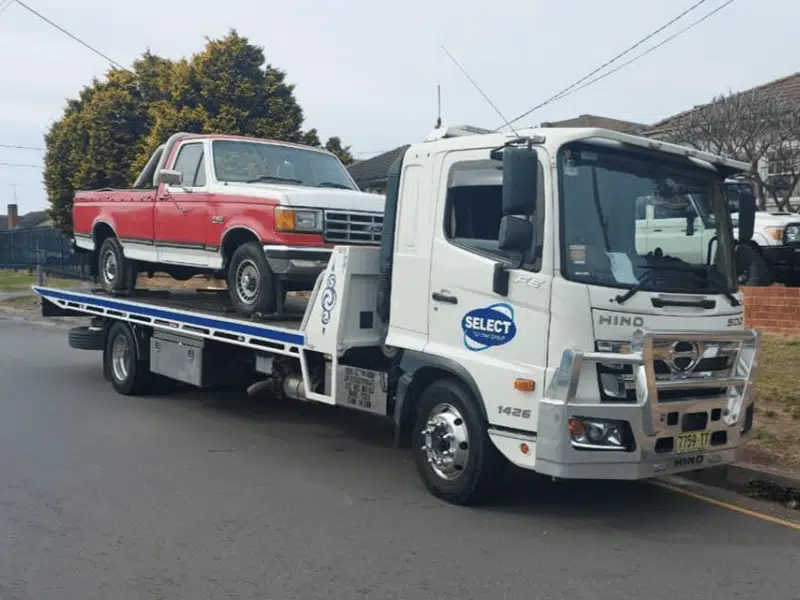
A tilt tray is a hydraulic deck that lowers to road level, so the car is winched on and carried rather than towed on its own wheels. For a vehicle that can’t be driven, that matters. Nothing turns or drags on the road.
Each alternative carries a condition. Under Rule 294 of the NSW Road Rules 2014, a rope or bar tow is only allowed when it’s safe, and a person licensed to drive the towed car is in its driver’s seat, controlling the brakes and steering. Towing with all four wheels on the road, as an A-frame does, risks driveline damage on some vehicles depending on their design, which is why the Royal Automobile Club of Queensland (RACQ) advises consulting the manufacturer first. Recovery straps are elasticised and made for pulling a bogged vehicle free, and the Australian Competition and Consumer Commission (ACCC) advises they should not be used for conventional towing.
Our team matches the truck to the vehicle before it leaves the yard, with weight and wheelbase deciding which deck suits the job. A tilt tray is the manufacturer-preferred way to move almost every electric vehicle, because lifting all four wheels off the ground protects the motor and the regenerative braking system. Our car towing covers all of Sydney.
Licensed Operators and the Standards Behind Them
Towing motor vehicles commercially in New South Wales is licensed work. Operators need a licence, and drivers need a tow truck driver certificate from NSW Fair Trading, which also lets you check that the driver is authorised to tow your car.
Select Tilt Tray Group holds NSW Tow Truck Operator Licence #05083 and has been moving vehicles and machinery across Sydney since 1994. That experience counts in the parts of the job that are easy to get wrong, such as getting a truck into a tight access and securing each wheel with rated straps.
Secondary Damage is the Real Comparison
Secondary damage is anything the tow adds to a car that was already off the road for something else. It’s the figure missing from most cost comparisons, because a free tow stops looking free the moment it creates a second repair.
The usual candidates are driveline damage where the vehicle wasn’t designed to be towed on its wheels, undercarriage and bumper damage from a bad angle over a gutter or a driveway, and damage caused when a line fails under load. A car that went in for a flat battery can come out needing considerably more.
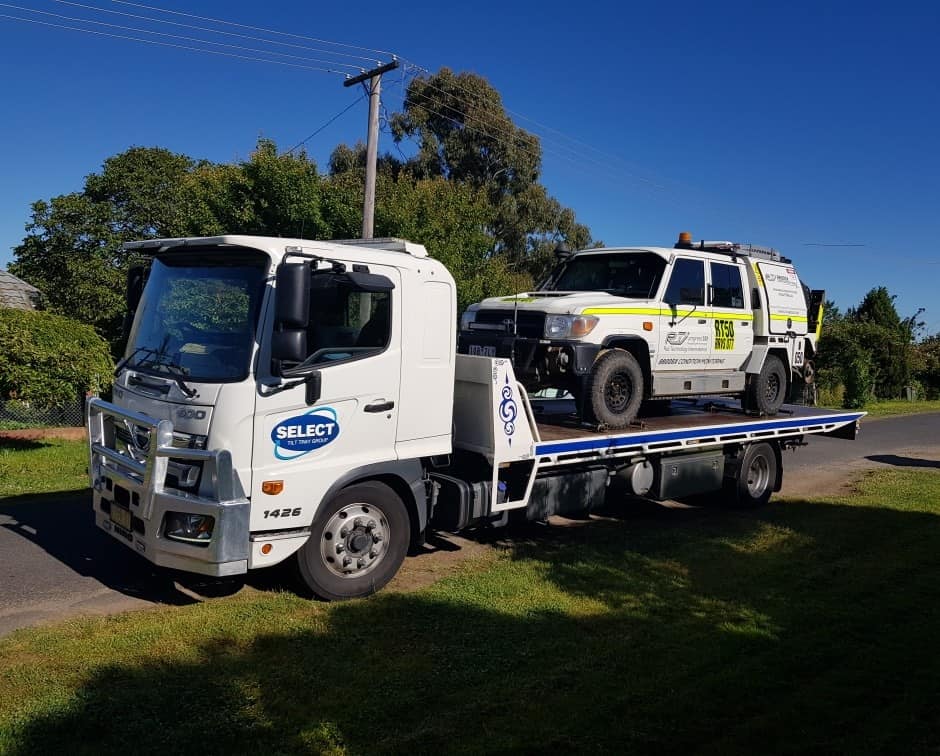
Carrying the vehicle on a deck lowers that risk, because nothing is dragged and no wheels turn on the road. If you’re still weighing this against doing it yourself, our guide on whether you should tow your own car sets out what goes wrong and why.
Time and Certainty on a Booked Move
On an urgent job, the value is speed. We operate 24/7, including weekends and public holidays, and confirm the price and an estimated arrival time on the call.
On a planned move, the value is different. A dealer transfer, a prestige car going to a workshop, or a vehicle heading into storage can be booked ahead. Where your job lines up with one of our return trips, backloading can save up to 50% of normal towing prices.
Either way, you know when it’s happening and what it costs before the truck moves.
More on preparation and choosing the right truck sits across our towing guides and resources.