
Permits, Routes and Escorts
Oversized Load Transport Sydney
Oversized load transport across Sydney and NSW, with permits, route planning and equipment matched to every oversize overmass (OSOM) load.
Oversized Load Transport for Freight That Exceeds Standard Road Limits
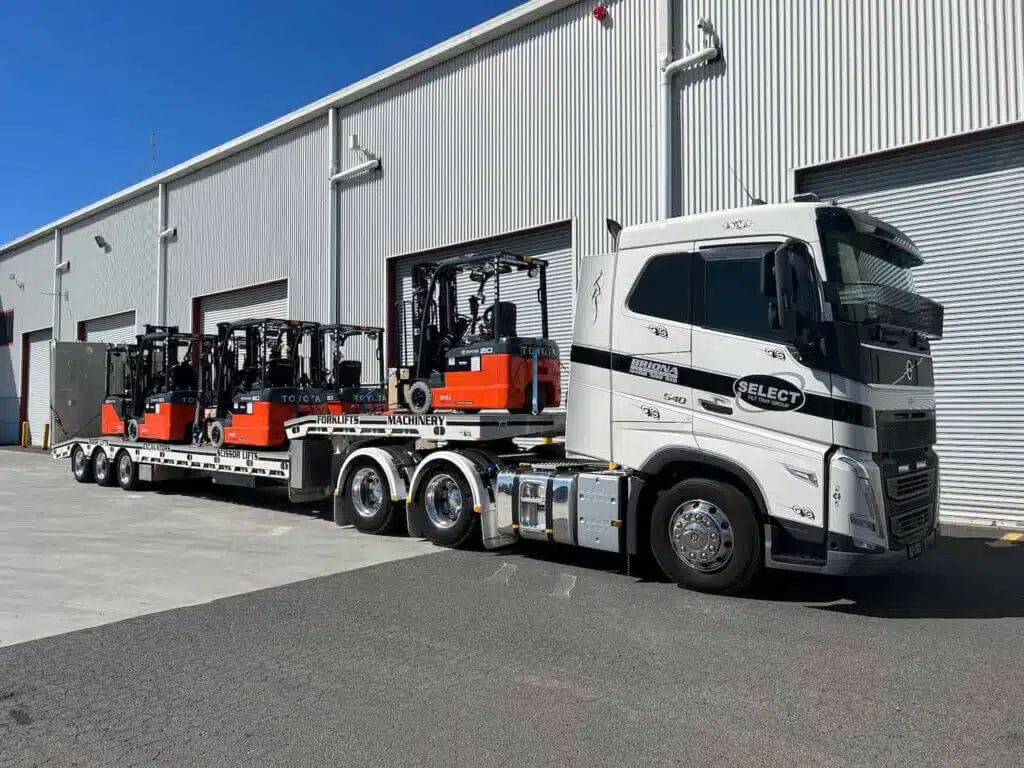
Our team moves oversized and overmass loads across NSW, covering freight that exceeds the standard dimension and mass limits set for public roads. These are indivisible loads, meaning they can’t be dismantled or split into smaller consignments to travel within those limits, so each movement is permitted and routed as a single job. This work sits within our wider tilt tray and heavy vehicle services.
From heavy plant and industrial machinery to prefabricated structures and large equipment, we have the fleet, operational experience, and compliance expertise to move every load safely and legally. Our truck towing service covers heavy rigid vehicles that sit within standard road limits.
What Counts as an Oversized Load?
In NSW, a load is classified as oversized (or oversize overmass, known as OSOM) when it exceeds the general standard access limits for most vehicles on public roads. The key thresholds are:
- Width exceeding 2.5 metres
- Height exceeding 4.3 metres (or 4.6 metres on approved high vehicle routes)
- Length exceeding 12.5 metres for a rigid vehicle, or 19 metres for a vehicle combination
- Mass exceeding the general mass limits for the vehicle configuration
Loads in the oversized category can include heavy plant and earthmoving equipment, large industrial machinery, prefabricated building components, transformers, tanks and other items that cannot be taken apart or broken down to fit within standard dimensions.
These loads need a different approach to standard towing services. They involve more detailed permit applications, route assessments, escort vehicles and often restricted-hours travel. Moving an oversized load without the correct approvals can result in fines, safety risks and project delays.
Loads of this type come out of construction, civil infrastructure, mining, manufacturing and logistics, where the equipment is built to a working size rather than a transportable one.

Permits and Compliance
Oversized load transport in NSW requires permits issued by Transport for NSW and, depending on the route, additional approval from local councils. The type of permit depends on the load dimensions, weight and the roads being used.
Our team manages the permit coordination process as part of the service, so you do not need to navigate the paperwork independently. We handle:
- Oversize overmass (OSOM) permit applications through Transport for NSW
- Route-specific approvals where council roads are involved
- Escort and pilot vehicle requirements based on load dimensions
- Travel condition compliance, including time-of-day restrictions and approved routes
- National Heavy Vehicle Regulator (NHVR) notice requirements where applicable
Getting your permits right is not optional. Non-compliant movements risk fines, hold-ups and liability issues, so we make sure every oversized transport job meets the regulatory requirements before the load leaves the depot.
Oversized Loads, Permits Included
Our team arranges permits, route planning and escorts for loads beyond standard limits across NSW. Send us the dimensions and we’ll price it.
Equipment for Oversized Loads
Moving oversized loads requires more than a standard tow truck. Our team operates a fleet of specialist vehicles and equipment suited to large, heavy and awkwardly shaped loads:
- Low loader trailers for heavy plant and machinery that sit too high for standard transport
- Super tilt tray trucks for large equipment requiring hydraulic tilt loading
- Flatbed trucks for wide or stable loads that need an open deck
- Rated restraint systems, chains, straps and blocking equipment matched to the load type and weight
Each job is assessed individually. We match the right combination of truck, trailer and rigging to the specific load, taking into account weight distribution, dimensions, centre of gravity and any handling restrictions.
Loads within standard heavy vehicle limits are covered under our heavy vehicle towing service. Plant and machinery moves within standard limits are handled by our machinery transport service.
How an Oversized Move Is Planned: Step by Step
Every oversized movement runs through the same five stages. The sequence keeps the load compliant with the permit conditions set by Transport for NSW, protects both the asset and the infrastructure along the route, and gives you a delivery window you can plan the rest of the job around.

1. Load assessment
Our team confirms the dimensions, mass and centre of gravity of the load, along with its condition and how it will be driven or lifted onto the trailer. Access is checked at both ends of the job, because a load that clears every restriction on the route can still be defeated by a gate width or a gradient at the delivery site.

2. Route planning
Once the load profile is set, we survey the route for clearance restrictions, road widths and turning constraints. Bridge and overhead obstruction assessments confirm height and weight limits; restricted-hours scheduling is applied where the permit requires night or off-peak travel; and we communicate with local councils and road authorities where route conditions call for it.

3. Permit approval
The load dimensions and the chosen route determine the permit. Our team lodges the oversize overmass (OSOM) application with Transport for NSW, secures any council approvals the route requires, and confirms the pilot and escort vehicle conditions attached to the movement before anything is scheduled.

4. Loading and restraint
Loading is carried out using the equipment matched to the load at the assessment stage. Rated restraint systems, chains, straps, blocking and bracing are applied and verified before the truck leaves the site, in line with Chain of Responsibility (CoR) obligations under heavy vehicle law, which hold everyone in the transport chain accountable for how a load is secured.

5. Transport and delivery
Our operators monitor the load in transit and adjust for conditions as they change, including any restricted-hours or off-peak travel the permit specifies. Unloading is planned with the same care as loading, which matters most on confined sites and live worksites where the delivery window is shared with other trades.
Why Sydney Chooses us for Oversized Loads
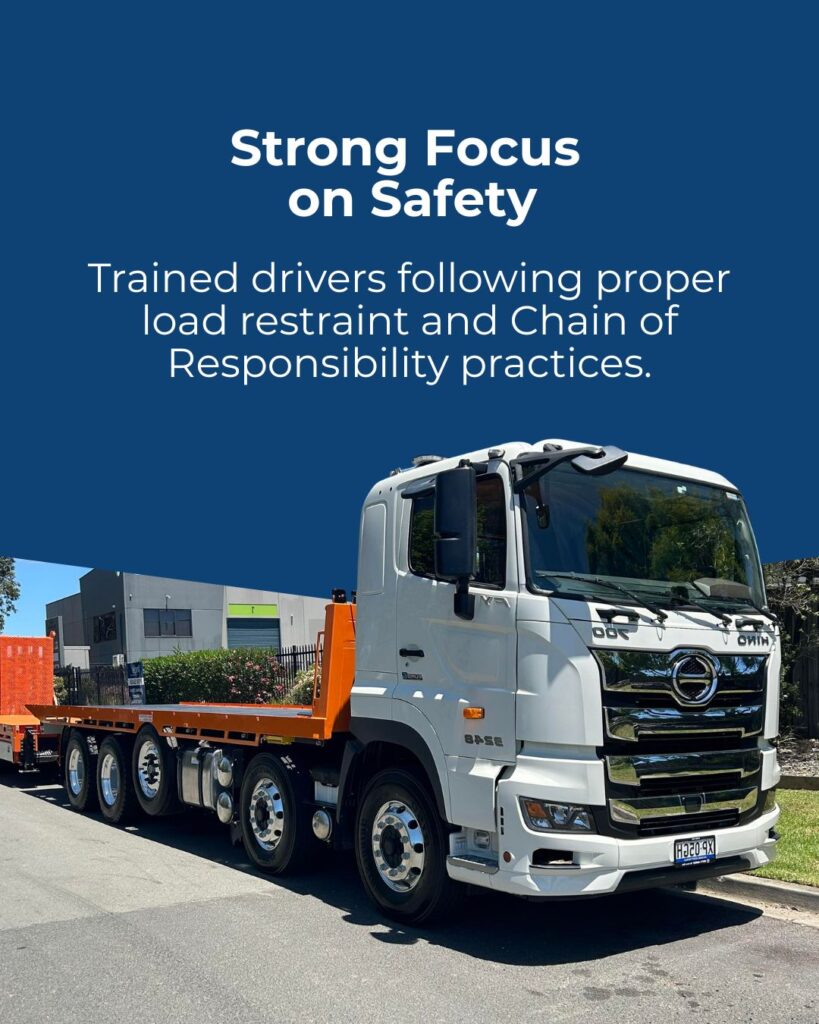
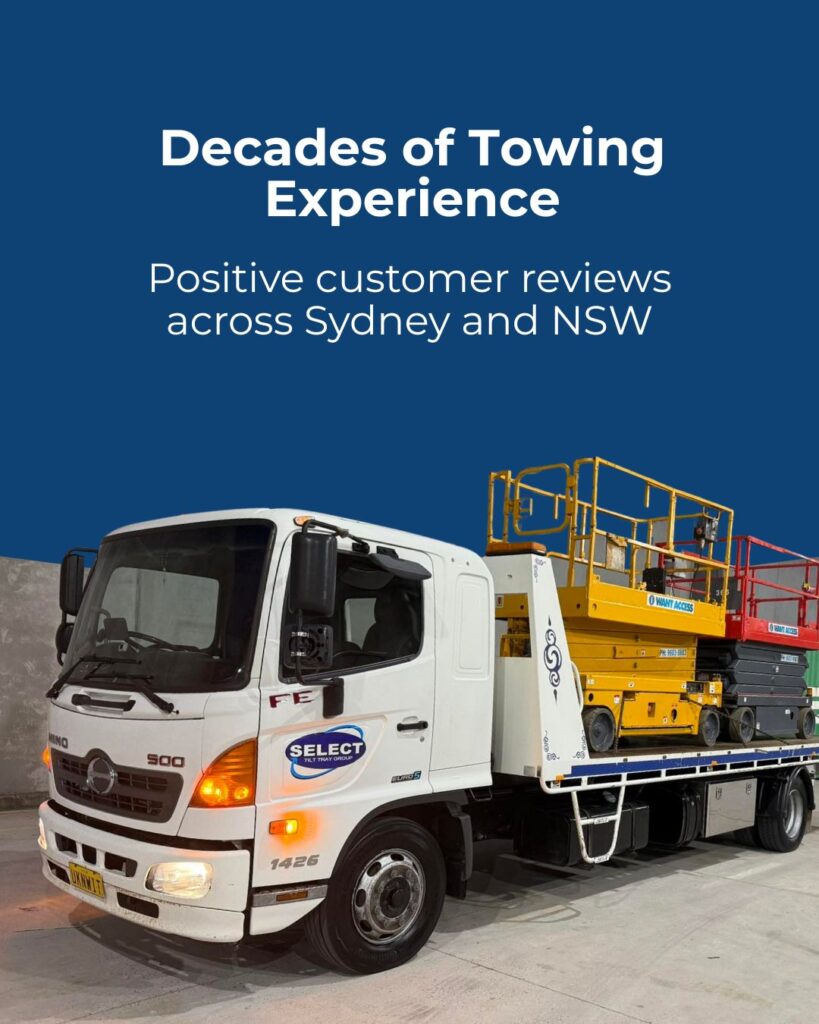
Choose a Sydney towing company with proven experience and the right equipment:
What Our Customers Say
EXCELLENT Based on 28 reviews
 Posted on Google
 Lihua Xu25 July 2026
Trustindex verifies that the original source of the review is Google.
Cool and efficient communication, Quick responsive paperwork team, Punctual services, Legendary fleet Bulletproof and well deserved 5 star. Hats off to you allPosted on Google conthefruiter26 September 2025We approached Select Tilt Tray Group to transport a 10T forklift from Sydney to Gloucester. The machine was collected without hassle and delivered to our workshop on schedule. Definitely the name in forklift transport, no one has the experience or equipment these guys do. Highly recommend 5 stars.Posted on Google
 Ryan Shou26 March 2024Had a great experience with Select Tilt Tray Group. Iain helped transport my forklift from Castle Hill to Seven Hills efficiently and safely. Impressed with the service and will definitely use them again. Highly recommend!Posted on Google
 Barb Lomas16 November 2023If you need this service you can’t go past Select Tilt Tray group. Excellent service and the friendliest guy. 5 stars isn’t enoughPosted on Google
 Alex Stephen15 August 2023Professional, courteous and efficient. Best towing company I have worked with, I have zero hesitation recommending this business.Posted on Google
 Rebecca Eland13 July 2023Many thanks to Claude and Jenny for transporting our shipping container and making sure it was positioned where we wanted it, so so happy. Seriously good service! Great price too!Posted on Google
 Pierre Filliez19 March 2023Today, Rick delivered, with his tilt truck, an old caravan that we bought. He was very careful, and the van arrived perfectly well at our place. I am very pleased to share this review with everyone as we are very happy with ‘Select Tilt Tray Group’. The team is super friendly, the offer was fair and they were also very quick to do the delivery. Communication with them was super easy, phone calls and emails etc. We are very happy.
Frequently Asked Questions
What is classed as an oversized load in NSW?
A load is classed as oversized in NSW when it exceeds the general access dimension or mass limits set by Transport for NSW for vehicles on public roads. The standard thresholds are 2.5 metres wide, 4.3 metres high (4.6 metres on approved routes) and 12.5 metres long for a rigid vehicle or 19 metres for a combination. Loads exceeding any of these limits require permits and may need escort vehicles.
Do I need a permit for oversized load transport?
Yes. Any load that exceeds the standard dimension or mass limits requires a permit from Transport for NSW. Depending on the route, you may also need council approvals and escort vehicles. Our team coordinates the full permit process as part of the transport service.
How far in advance should I book oversized load transport?
Book as early as you can, particularly for loads that need permits, since processing times can run longer than expected. For straightforward jobs, a few days’ notice is usually sufficient. For complex or high-risk moves, allow at least one to two weeks.
Can oversized loads be transported at any time of day?
Not always. Many oversized load permits include time-of-day restrictions, requiring travel during off-peak hours or overnight. This depends on the load dimensions, the route and the conditions set by Transport for NSW. Our team schedules each movement in line with permit requirements.
What roads can oversized loads travel on?
Oversized loads are restricted to approved routes specified in the transport permit. These routes take into account bridge clearances, road widths, overhead obstructions and weight limits. Our team conducts route assessments before every job to confirm the safest and most efficient path.
Do you provide pilot vehicles for oversized transport?
Yes. Where permit conditions require escort or pilot vehicles, we coordinate this as part of the service. The number of escort vehicles depends on the load width, height and the roads being used.
How is an oversized load secured during transport?
Each load is secured using rated restraint systems matched to the weight, dimensions and type of equipment being transported. This includes chains, straps, blocking and bracing as required. Our operators are trained in load restraint and Chain of Responsibility (CoR) compliance under heavy vehicle law.
Is a wide load the same as an oversized load?
A wide load is one category of oversized load. In NSW, a load is classed as oversize once it exceeds 2.5 metres in width, so most jobs described as wide load transport or over-dimensional towing fall under the same oversize overmass permit system as over-height and over-length movements. Width is the main factor in whether pilot or escort vehicles are required, so a wide load often carries heavier escort conditions than a load that is only over-length.